TRVC Project Approach and Results

Supporting the transition to low-carbon, climate-resilient agricultural landscapes and livelihoods in the Mekong Delta.
Project Overview

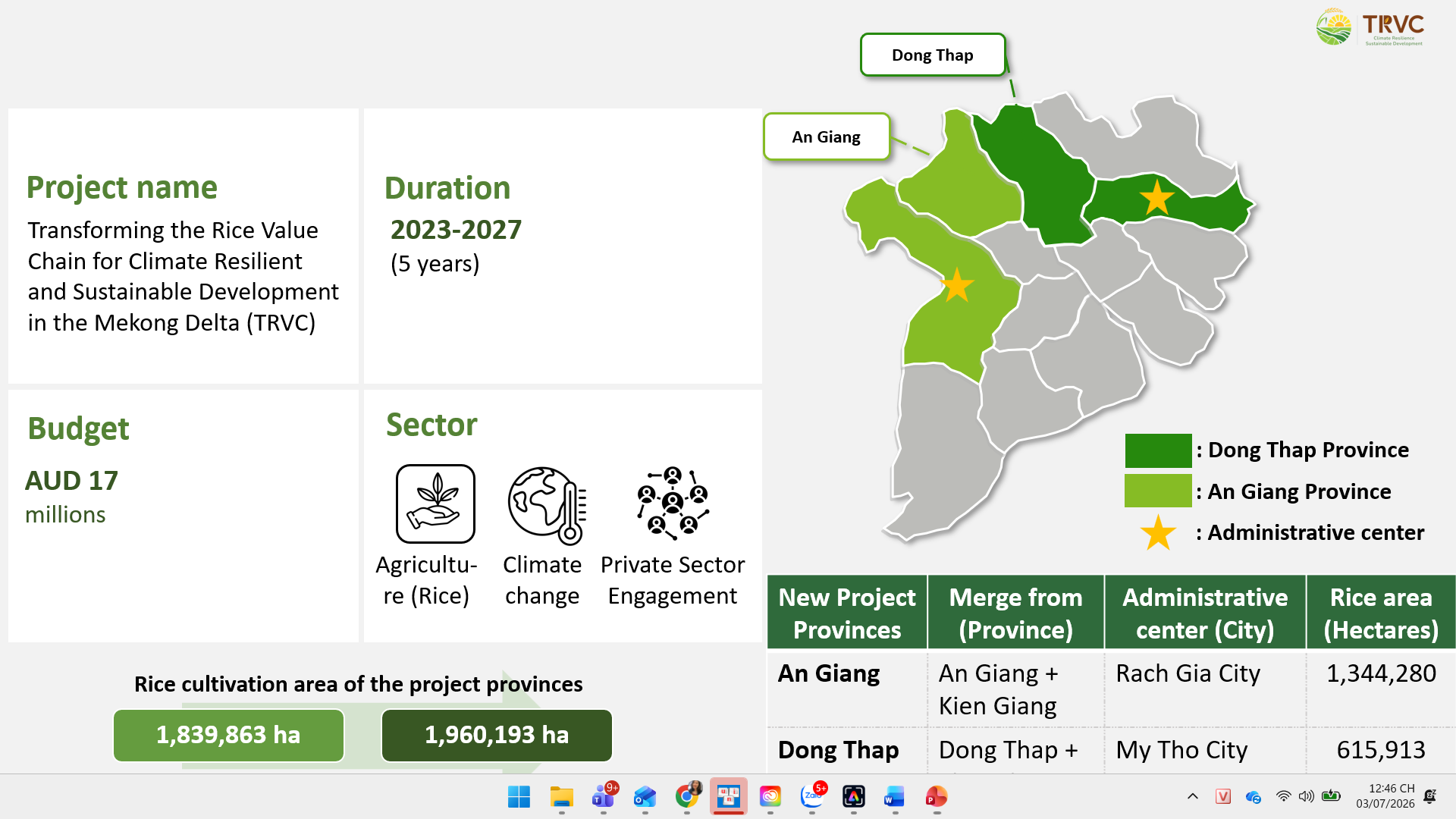
  1. Funded by the Australian Department of Foreign Affairs and Trade (DFAT), the Transforming the Rice Value Chain for Climate-Resilient and Sustainable Development in the Mekong Delta (TRVC) project is being implemented over five years (2023–2027) to support the transition toward low-carbon, climate-resilient agricultural landscapes and livelihoods in the Mekong Delta.
  2. The project is implemented by the Netherlands Development Organisation (SNV) in collaboration with the Ministry of Agriculture and Environment, and the Departments of Agriculture and Environment of An Giang and Dong Thap provinces.
200.000
hectares of low-emission rice cultivation by 2028
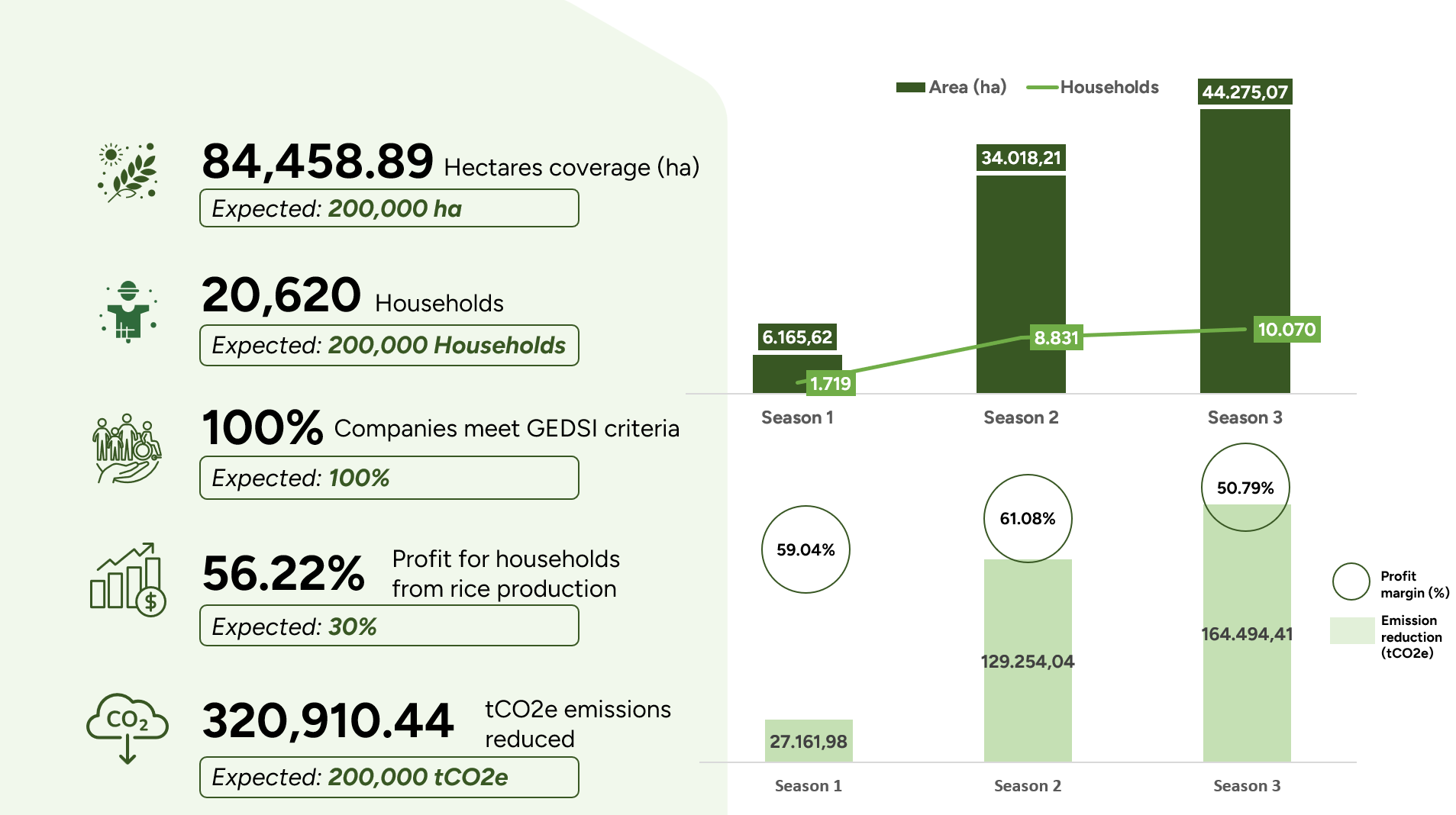
  1. As a pioneering initiative in Viet Nam, the project aims to support the adoption of low-emission rice production across more than 200,000 hectares by 2028, contributing to the Government of Viet Nam’s ambition to develop one million hectares of high-quality, low-emission rice cultivation in the Mekong Delta.

Challenges

  1. As a pioneering initiative, the project aims to support a shift to low-emission rice production over 200,000 hectares by 2028, contributing to the ambition of the Government of Vietnam to reach one million hectares in the Mekong Delta.
4
million hectares is the total area of the Mekong Delta
95
% of Vietnam's rice exports
1.5
million farmers participate in this rice production system
  1. Smallholder farmers are experiencing declining profitability due to rising production costs, inefficient use of water and agricultural inputs, soil degradation, and increasing climate-related risks such as floods and droughts. At the same time, rice cultivation remains a major source of methane and nitrous oxide emissions, posing challenges to achieving both production goals and Vietnam’s climate commitments.

Our approach

  1. In response, the TRVC project adopts a systemic, market-driven, and multi-stakeholder approach to accelerate the transformation of Vietnam’s rice sector toward greater sustainability.
  2. Using a Pay-for-Results mechanism, TRVC incentivises private enterprises in the Rice Value Chain (RVC) to scale-up innovative technologies and practices to achieve higher economic outcomes for smallholder farmers and RVC actors, improve rice quality, promote inclusive social values, reduce greenhouse gas (GHG) emissions and mitigate the environmental footprint of rice production.
  3. Beyond short-term incentives, TRVC demonstrates the long-term business value of sustainable rice value chains, encouraging enterprises to expand investments in low-emission rice production. Through robust Measurement, Reporting and Verification (MRV) systems and credible certification, TRVC generates verified evidence of emissions reductions, enabling enterprises to access premium markets and green finance opportunities while enhancing the value and competitiveness of Vietnamese rice

Our activities

1

Pre-competitive awareness-raising, public-private coordination & capacity development

Raise awareness, strengthen stakeholder engagement and public-private coordination, and build the capacity of RVC companies and other stakeholders on low-emission rice production, MRV, Gender Equality, Disability and Social Inclusion (GEDSI), and environmental and social safeguards to support effective prize competition implementation and the scaling of low-emission rice production.
2

Prize competition over six seasonal crops

Six seasonal crop competitions incentivise RVC companies to adopt and scale low-emission rice production. Participating companies strengthen market linkages through the establishment of offtake agreements, provide training and advancement services, and integrate measures that enhance environmental and social performance across their supply chains.
3

Strengthening the support ecosystem for low-emission rice production

Support the development of low-carbon enabling environment by establishing a carbon project registry and reporting mechanisms for NDC contribution, informing the development of a national rice MRV system, strengthening regulatory frameworks for carbon project registration and benefit distribution, and facilitating certification and market development for high-quality low-carbon rice.

Results through Crop 3 (Summer–Autumn 2025)

Featured people

Ms. Nguyen Thi Diem - Deputy Director of Chon Chinh Company

The European market requires higher quality standards: reducing emissions, meeting strict maximum residue limits, and having official rice brand certification for acceptance. No matter how much we explain or convince buyers, they will not accept the product without certification.

That is why we are very pleased to participate in the TRVC Project. Through the Project, we have reached new customers in Europe and attracted interest from international partners seeking collaboration.

Mr. Pham Anh Tuan and Ms. Huynh Thi Dep

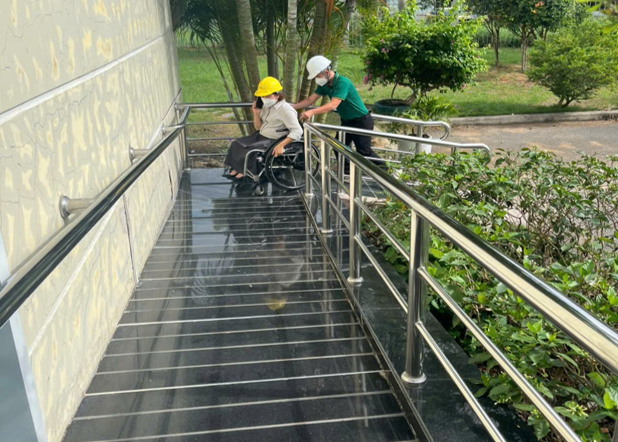
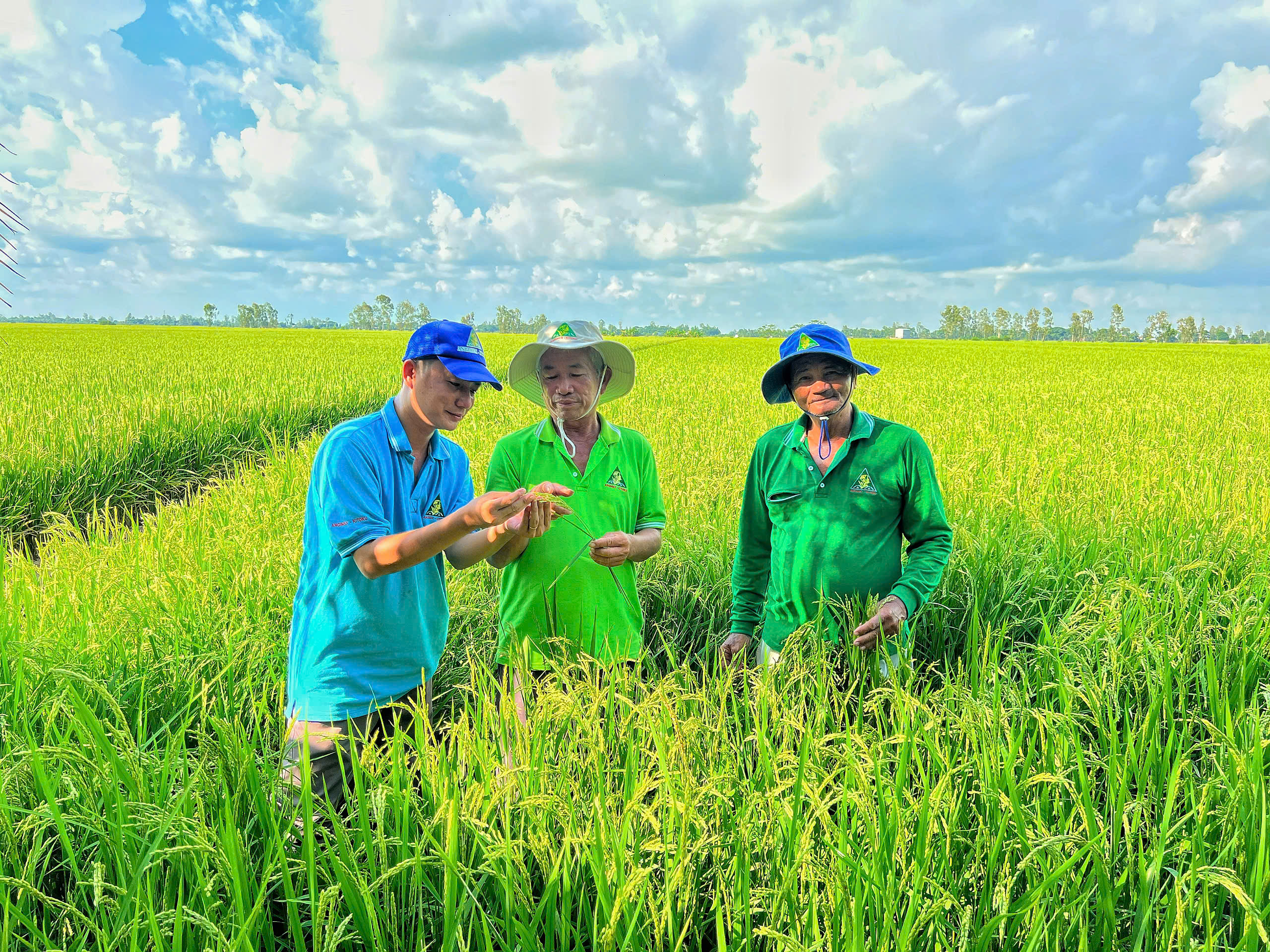
Our decision to partner with Angimex–Kitoku and join the TRVC Project was not based on preferential support for persons with disabilities, but on practical benefits such as improved production processes, clear technical guidance, and stable output through contract farming.

“When our business is successful, I feel more confident. At first, I was also scared and didn’t know how to cope with life. But our living conditions have improved, and my husband has become less short-tempered and more hardworking.” (He has hearing and speech disabilities.)

Ms. Thi Kim Dieu - Khmer smallholder farmer

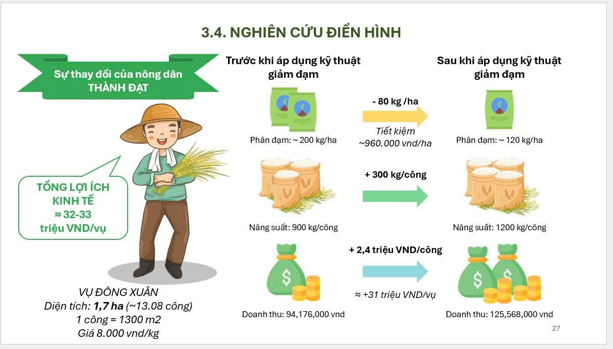
Since joining the low-emission rice farming model through the partnership between Duoc Mua Coop. and Trung An Company in TRVC Project, I have seen significant improvements. Labor requirements are lower, farming has become easier, and input costs have decreased through reduced fertilizer and seed use. As a result, my income has increased by VND 400,000–500,000/ công, while input costs have fallen by VND 300,000–400,000/ công.

Seeing the rice we produced exported to Japan gives me great pride and confidence as our hard work meets international standards.

Ms. Tran Thi Thu Giang - Head of a farmer group

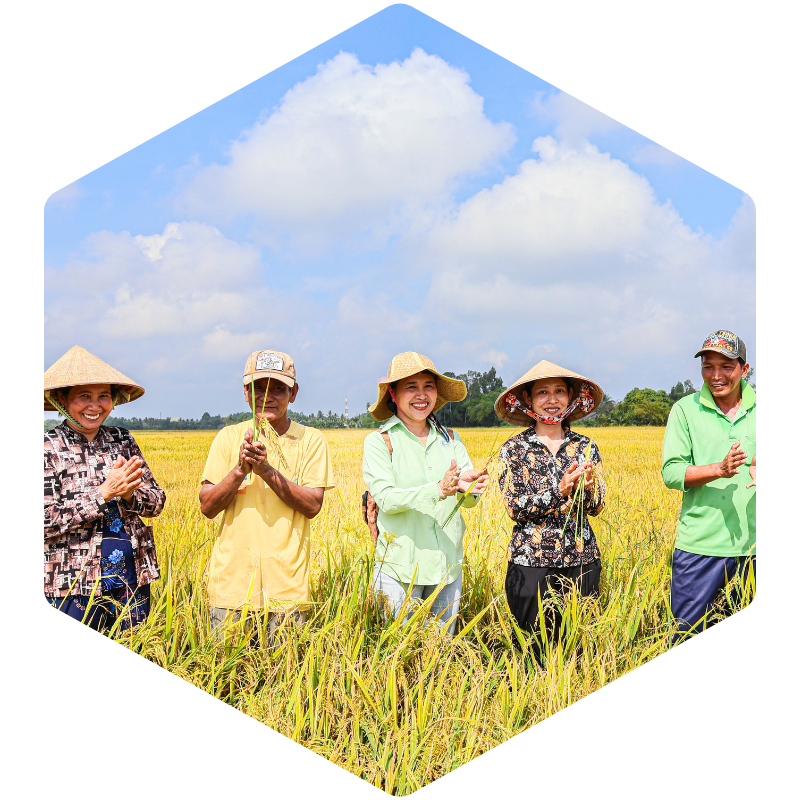
For the past few years, farmers like us have felt very encouraged to participate in the partnership with VINARICE in the TRVC Project. We really hope the Project will continue so that farmers can keep joining for more cropping seasons, because from what I have seen, low-emission rice farming does not cause any disadvantages for farmers at all.

For example, not burning rice straw helps reduce smoke, protect health, and create extra income from selling baled straw. After being part of this model for several years, I can clearly see the benefits. Farmers are not losing out, it is actually better for our income, our health, and the environment.

Mr. Danh Dan - Khmer smallholder farmer

A few years ago, my farming was unstable. Since partnering with Duoc Mua Cooperative and Trung An Company through the TRVC Project, things have improved and I feel more secure. I reduced seed use from 30 to 12 kilograms per công following Trung An’s practices. Although the field looks less dense, it lowers input costs, reduces fertilizer and pesticide use, and keeps the rice healthier.

Since joining the Project, I have expanded from 15 to 35 công. With lower production costs, our income has improved, and my wife and I feel happier and more confident about the future.

Ms. Tran Ngoc Chau - Dep. Director, Angimex–Kitoku

The journey for Angimex-Kitoku to secure a sustainable finance partnership with MUFG Bank was long and challenging. Data from the TRVC Project played an important role in meeting MUFG’s evaluation criteria. After due diligence, Angimex-Kitoku was confirmed as the first enterprise in Vietnam’s agriculture sector to obtain a sustainability-linked loan.

Even our parent company was surprised, as MUFG is one of the world’s leading financial institutions with very strict data verification standards for sustainability-linked financing.