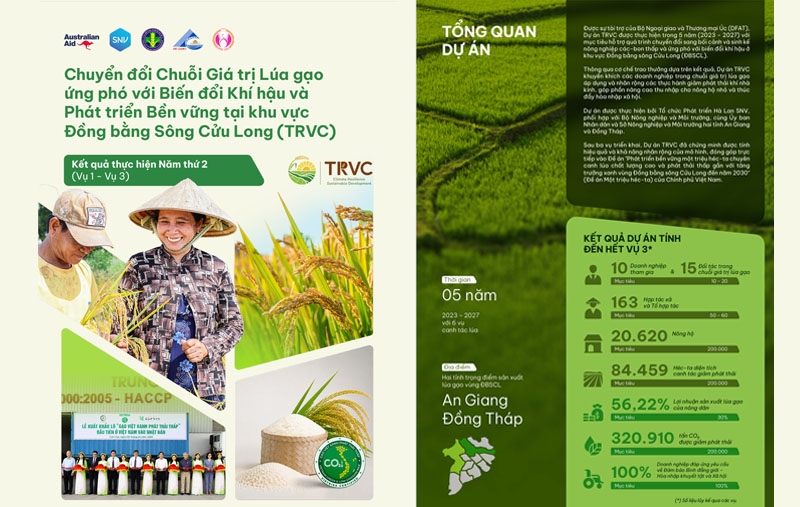
Strategic Context
Over the past decade, several Vietnamese rice exporters have adopted environmentally sustainable and low-emission production practices. However, prior to the TRVC initiative, these efforts were largely fragmented and lacked:
- Standardized carbon measurement methodologies
- Independent verification mechanisms
- A nationally recognized certification and branding framework
“At the same time, international markets — particularly in Europe and Japan — have strengthened ESG-related procurement requirements. Sustainability claims are increasingly scrutinized. Buyers demand measurable carbon performance, traceability, and institutional credibility.”
Market Demand and Pathways for Low-Carbon Rice
- The Core Market Question: Rice exporters and producers increasingly face a pressing question: How can low-carbon rice transition from field-level practice to recognized market value in both domestic and international markets?
- Global food markets are undergoing rapid transformation. Buyers—particularly in Japan, the EU, and other high-standard markets—are strengthening requirements related to:
Carbon footprint transparency
- Traceability across supply chains
- Responsible sourcing and ESG compliance
- Verified environmental performance
- At the same time, domestic consumers are becoming more aware of sustainability claims, though purchasing behavior remains price-sensitive and trust-dependent.
- Low-carbon production alone does not automatically generate market premiums. It must be translated into credible, verifiable and communicable market signals.